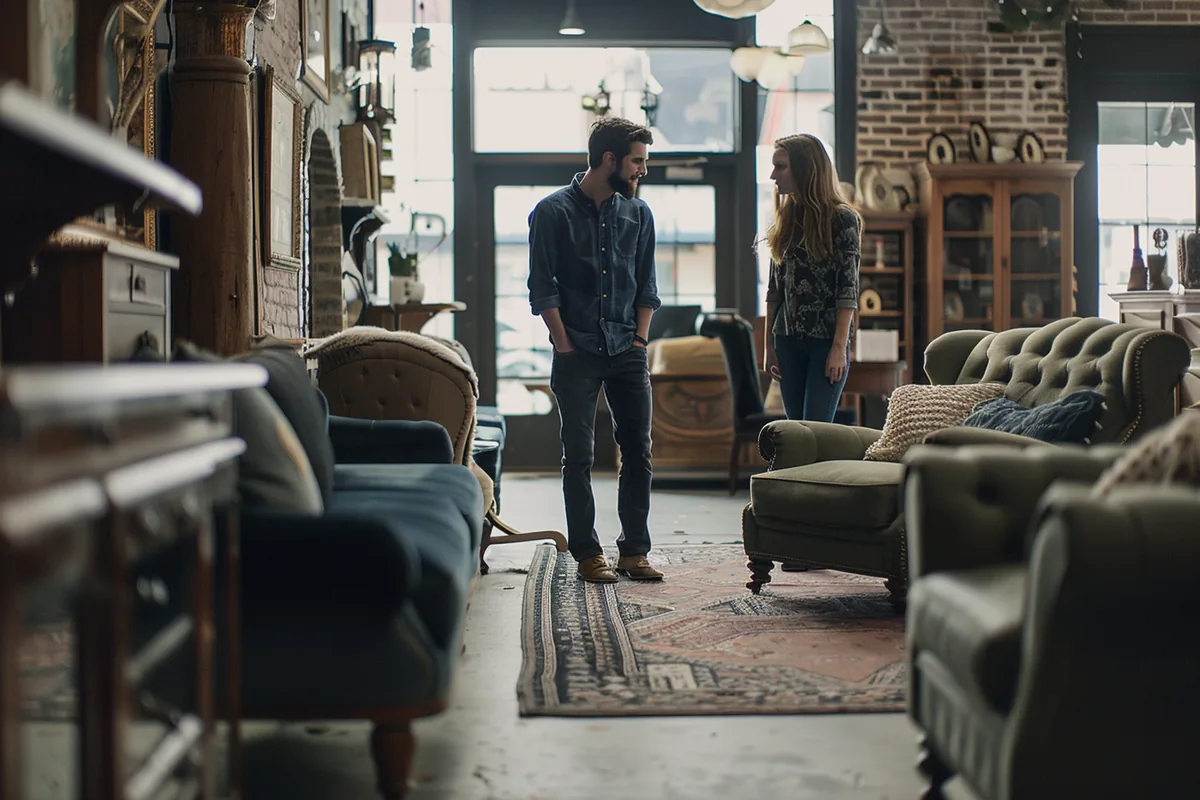
Furniture Financing vs. Buying Used: An Honest Comparison
The choice between financing new furniture and buying used isn't really a financial comparison alone — it's about how you value time, durability, and aesthetic consistency. Here's a framework for thinking it through.

The two paths, honestly
You can furnish an apartment in two ways. The Zebit BNPL Furniture Financing path is to walk into one or two retailers, pick out the pieces you need, sign a financing agreement, and have everything delivered within a week. The used path is to spend several weekends scouring estate sales, neighborhood resellers, and online classifieds, paying cash for individual pieces as you find them. Both paths can produce a fully-furnished apartment. They produce different end results, take different amounts of time, and cost different amounts of money — and which is better depends on what you're optimizing for.
The hidden costs of "free"
People who default to the used path often underestimate the time cost. Five Sundays of driving across town to look at sectionals adds up to about thirty hours of your weekend time, plus gas, plus the meals you ate while out. If your time is worth twenty-five dollars per hour to you (a reasonable estimate for many young professionals), thirty hours is seven hundred and fifty dollars of opportunity cost — sometimes more than the financing cost of buying new. This calculation isn't a reason to dismiss the used path; it's a reason to be honest about its true cost.
The hidden value of "used"
That said, the used path has values the time-cost analysis doesn't capture. Furniture from estate sales and neighborhood resellers is often higher quality than what's available at mid-tier furniture retailers today, because it was built in an era when domestic manufacturing produced solid hardwood pieces designed to last decades. A solid oak dresser from a 1970s estate is structurally better than most contemporary $400 dressers and often costs less. Patience plus a good eye can produce a higher-quality furnished apartment than financing new, at a lower total cost — if you have the patience and the eye.
Quality varies by category
One useful refinement: the financing-vs-used choice isn't all-or-nothing. Different furniture categories have different quality dynamics. Beds and mattresses are almost always worth buying new for hygiene reasons — used mattresses can carry pests and aren't worth the savings. Sofas can go either way; a well-built solid-frame used sofa, professionally cleaned, can outlast three cheap new sofas. Dining tables and dressers are excellent used purchases because the failure modes are visible and the construction is straightforward to evaluate. Lighting and electronics are generally not worth buying used for safety reasons. Mirrors, frames, and decorative objects are often better used because the aesthetic of older pieces is harder to replicate at new-furniture price points. A mixed strategy — finance the bed and sofa new, buy the dresser and dining table used, accumulate decorative pieces over months — often produces the best combination of quality, cost, and time.
The aesthetic question
If your aesthetic preference is matched-set, magazine-spread coordination, the used path is hard. The pieces you find don't match each other, the wood tones are inconsistent, the upholstery doesn't coordinate. Financing new furniture from a single retailer's collection is much easier for this aesthetic. If your aesthetic preference is eclectic, layered, slightly imperfect — apartments that look gathered over time rather than purchased on one day — the used path supports that aesthetic naturally and the financed path actually works against it. Your aesthetic preference matters in the choice as much as the financial math.
The break-even calculation
For a rough math comparison, consider a $2,500 furniture purchase financed over eighteen months at 30% APR. The total interest paid is about $537 — so the total cost of credit is about $3,037. If the same furnishings could be purchased used for $1,400 in cash (a typical estimate if you're patient and selective), the difference is about $1,637 in your favor on the used path — minus the time cost and minus the delivery and pickup logistics of moving multiple individual pieces. If you can do the used route in a single intensive weekend with one truck rental and a friend's help, the difference is mostly captured. If it takes five weekends, the time cost erodes the savings substantially.
What the choice signals about your situation
People at different life stages tend to lean toward one path. First apartment, first real job: the financed path lets you walk into a normal living environment immediately, which has psychological value when other things in life are also new. Second or third apartment, established job: a hybrid path of selectively financing key pieces while accumulating the rest used produces a more durable result. Downsizing later in life: the used path or selling-and-replacing your existing furniture is often preferable to financing new — you've already learned what you actually use. There's no single correct answer; the right answer evolves with the situation.
If you're going the used route, a few practical notes
Buying used well, when you're skipping the BNPL or installment route, requires a few habits. Carry a tape measure on every viewing trip — pieces that look great in the seller's space often don't fit in yours. Photograph the pieces before deciding to make returning home to think it over easier. Negotiate on price — most sellers expect it, and twenty percent off the asking price is common. Inspect for damage thoroughly, particularly hidden damage on the underside of upholstered pieces and inside drawers. Have a backup plan for transport before agreeing to buy — a rented truck booked in advance for a single Saturday tends to be more efficient than trying to fit individual pieces into a sedan multiple times.
If you're going the Zebit BNPL financed route, a few practical notes
Finance only the pieces you'd buy new even without financing. Don't let the availability of financing tempt you into buying more than you need. Itemize the purchase before applying — the round number from the financing application is rarely the right amount. Confirm delivery and installation are included or budgeted separately, and add them to the financed total if they're meaningful. Read the loan agreement before signing, particularly the prepayment terms and the late fee schedule.
The mixed path, in practice
Most customers we talk to ultimately follow a mixed path. A new mattress and bed from a financed retailer. A used dining table and chairs from a Sunday estate sale. A new sofa selected carefully. A used dresser and nightstand from neighborhood resellers. The result tends to be a $1,000 to $2,000 buy now pay later financed total instead of a $4,000 financed total, plus several hundred dollars in cash purchases, plus an apartment that looks gathered rather than catalog-sourced. This is the path most worth recommending if you don't have a strong default toward one extreme or the other.
A category-by-category recommendation
If you're trying to decide piece by piece, here's a working summary of where the recommendation usually lands. Mattress and bed frame: buy new for hygiene and longevity reasons. Sofa: buy new if you'll keep it five-plus years; buy used if you'll move within two and don't want to transport a bulky piece twice. Dining table: used wins almost always — solid wood tables from estate sales beat most new tables at multiples of the price. Dining chairs: mixed, depending on availability of matched sets. Dresser and nightstand: used wins; solid wood dressers from earlier eras are structurally better than most modern pieces. Sofa table and side tables: used wins easily; these are decorative pieces with low functional requirements. Desk: used wins for most cases; an ergonomic desk chair, however, is usually worth buying new. Bookcase and shelving: depends on your aesthetic; modular new can be cheaper than the matched used set.
Where to find used furniture worth buying
Three sources tend to produce the best results. Estate sales: typically Saturdays in established neighborhoods; check estatesales.net or similar aggregators. Estate sales tend to have older, higher-quality pieces priced for quick clearance. Online classifieds in your specific neighborhood: Facebook Marketplace, Craigslist, and Nextdoor often have pieces from people moving or downsizing. The selection rotates constantly; checking weekly catches new listings. Auction houses and estate liquidators: less famous than estate sales but often source from the same households; check local listings.
The actual time investment, honestly
If you're committed to furnishing well from used sources, plan for about six weekends of active searching plus some weekday evenings researching specific listings. Six weekends is meaningful — it's most of a quarter. For some people, the six weekends are enjoyable (treasure-hunting); for others, they're a chore. Be honest about which you are before committing to the used path. A hybrid path — financing the urgent pieces from a retailer while accumulating other pieces used over six months — captures most of the cost savings without front-loading all the time investment.
The resale value angle
One advantage of used furniture that rarely gets discussed: depreciation curves are different. A new sofa loses most of its resale value the day it leaves the showroom; a vintage mid-century sofa from an estate sale tends to hold value or appreciate slightly. If you're likely to move within a few years and would sell furniture before moving, used pieces typically recover most of their purchase price; new pieces typically recover less than half. The total cost of ownership across a move is different than the purchase price alone.
Refurbishing as a middle path
One option that bridges the two extremes: buying used pieces and refurbishing them. A solid wood dresser from an estate sale at sixty dollars, with a hundred dollars of effort in stripping, sanding, and refinishing, becomes a $160 piece that often looks better and lasts longer than a $400 new dresser. The refurbishing time investment is real — typically a weekend's worth of work per piece, plus drying time — but for some renters it's enjoyable and produces pieces with personality. The skills also transfer; once you've refurbished one piece, the next one is faster.
The environmental dimension
One additional factor worth mentioning: used furniture has a smaller environmental footprint than new furniture for the obvious reason that no new material is being manufactured, packaged, and shipped. For renters who care about the environmental impact of their purchases, the used path aligns naturally. The financial argument is sometimes a tie or close to it; the environmental argument tips toward used cleanly. This isn't usually the decisive factor, but it's a reasonable consideration for customers for whom it matters.
The negotiation skills the used path builds
One unexpected benefit of the used path is that it builds practical negotiation experience. Buying used furniture means asking for prices, evaluating condition, walking away when the deal isn't right, and reaching mutual agreements with strangers. These skills transfer to many other parts of adult life — negotiating apartment rent, dealing with service contractors, handling salary discussions. People who furnish a first apartment by negotiating used purchases often report that the practice paid off in other negotiations months and years later. The financed path produces no equivalent skill-building, because the financing application doesn't involve any back-and-forth.
How a hybrid timeline tends to actually unfold
For most renters who choose the hybrid path, the timeline tends to look like this. Move-in week: bed, mattress, basic kitchen, basic bathroom essentials, all purchased new from a financed retailer or paid in cash. Weeks two through six: dining setup, primary seating, work surface, basic storage — a mix of cash purchases and one or two used finds. Months two through six: gradual accumulation of decorative items, secondary seating, lamps, rugs, art, occasional pieces — almost entirely used or cash purchases as opportunities arise. The result by month six is a well-furnished apartment at meaningfully lower total cost than either pure extreme, with a financing balance that's small or already paid down.
One last category-specific note
If you take only one piece of practical advice from this article, take this: invest in the bed and the sofa, optimize everything else for cost. The bed is where you spend a third of your life; the sofa is where you spend most of your waking time at home. Each deserves real attention to quality, regardless of whether you finance it new or hunt for an exceptional used piece. Every other item in the apartment, from dining table to dresser to lamps, can be approached more flexibly. This single-rule framing prevents the most common furnishing regret — having spent the money in places that mattered less than expected — and produces an apartment that feels good to live in rather than just one that looks complete in photos.
Two related articles to read next

Emergency Funds and What Actually Counts as an Emergency
By Holden Marchetti · Personal Finance Writer

Small Business Cashflow Through the Slow Months
By Imani Brathwaite · Small Business Editor